 News
NewsIraq signs modern irrigation contracts targeting 3.5 million dunams
The agriculture ministry announced agreements for more than 13,000 systems; the target area does not establish installation or realised water savings.
Event / data period: 2026-07-16
Published: · Updated:
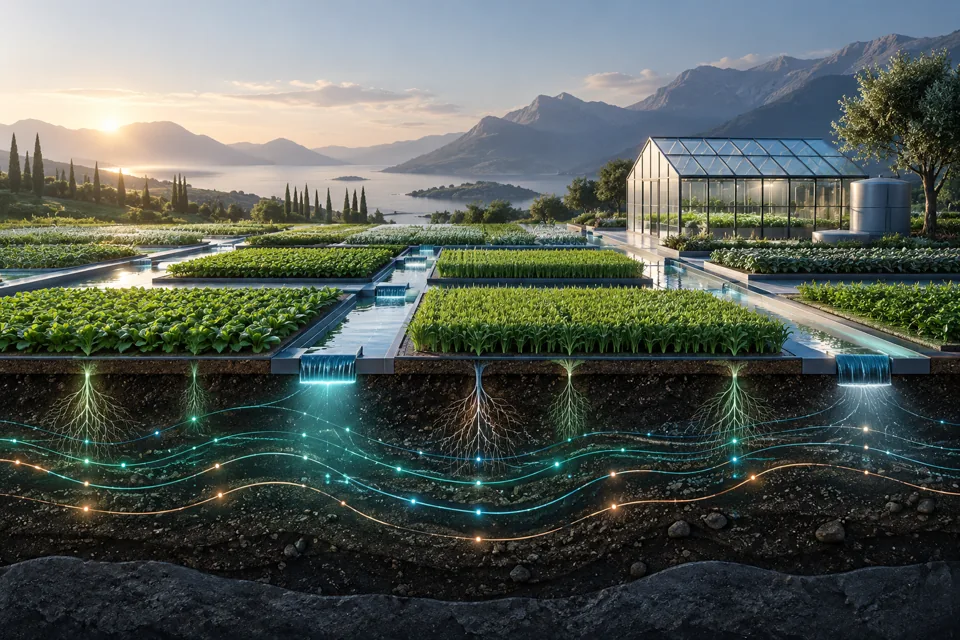 Illustration
Iraq’s Ministry of Agriculture said it had signed contracts with international companies to expand modern irrigation. A 16 July report by Iraqi Media Network (IMN), quoting the agriculture ministry spokesperson, said the agreements are intended to cover about 3.5 million dunams through more than 13,000 systems. That figure describes the announced contractual target. It does not mean every system has been installed in the field, delivered to a farmer, or put to use on the planned land.
According to the ministry spokesperson quoted by INA, the systems are expected to rely on groundwater and reduce pressure on surface water in the Tigris and Euphrates. The ministry described climate change, dwindling water resources, lower rainfall and drought as challenges facing agriculture. This context explains the stated rationale for buying equipment, but the announcement does not show how much water security will improve. It includes no numerical information about aquifer capacity or regional water budgets.
The stages after signing will matter for assessing delivery: manufacture and shipping, installation, power connections, operating instruction for farmers, maintenance and spare parts. The report gives no total contract value, contractor names, delivery schedule, farmer payment terms or details of government support. It also does not say how many growers will qualify, how recipients will be selected, or when the 3.5-million-dunam target is expected to be complete.
Modern drip or sprinkler equipment can improve water efficiency on an individual farm, but that does not automatically mean withdrawals fall by the same proportion across a whole basin. Efficiency can encourage farmers to irrigate more land or intensify production. Groundwater use also depends on pumping energy and whether wells draw water at a sustainable rate. These are conditions to monitor when assessing the ministry’s stated choice of water source, not outcomes that the contract announcement has already demonstrated.
The ministry’s account also mentioned problems in getting produce ready for market. Its spokesperson cited sorting, packaging and labelling as constraints on marketing and exports, and said processing products domestically can add value compared with exporting raw goods. Irrigation investment may affect the volume or quality of crops, but processing, cold chains, standards compliance and buyer relationships require separate capacity. The contract report does not set out whether any of that marketing infrastructure is included.
Measuring progress on production and water savings will require more than counting equipment. Useful indicators would include land where systems are actually operating, water withdrawals per crop and season, groundwater levels, yields, energy costs and farmers’ irrigation expenses compared with a baseline. A target area is an output measure; it is not a measure of yield per hectare or total basin-level savings. Without such data, the intended environmental and production benefits remain aims rather than measured results.
The report uses the dunam, a local land-area unit, and no conversion is made here. It also does not describe the contracts as a completed public investment or as 13,000 working systems. The supported fact is that the ministry announced contracts with a target area and system count. Follow-up information on delivery, installation, operation and measured water outcomes would allow readers to compare the target with implementation.
Data
Agriculture indicators
Figures, periods and scope reported by the cited official source.
- Contracted target coverage
- 3.5 million dunams planned
- 2026-07-16 · Target
Methodology
The indicator preserves the source statement’s count, period and observed or projected basis.
Updated: